by
by 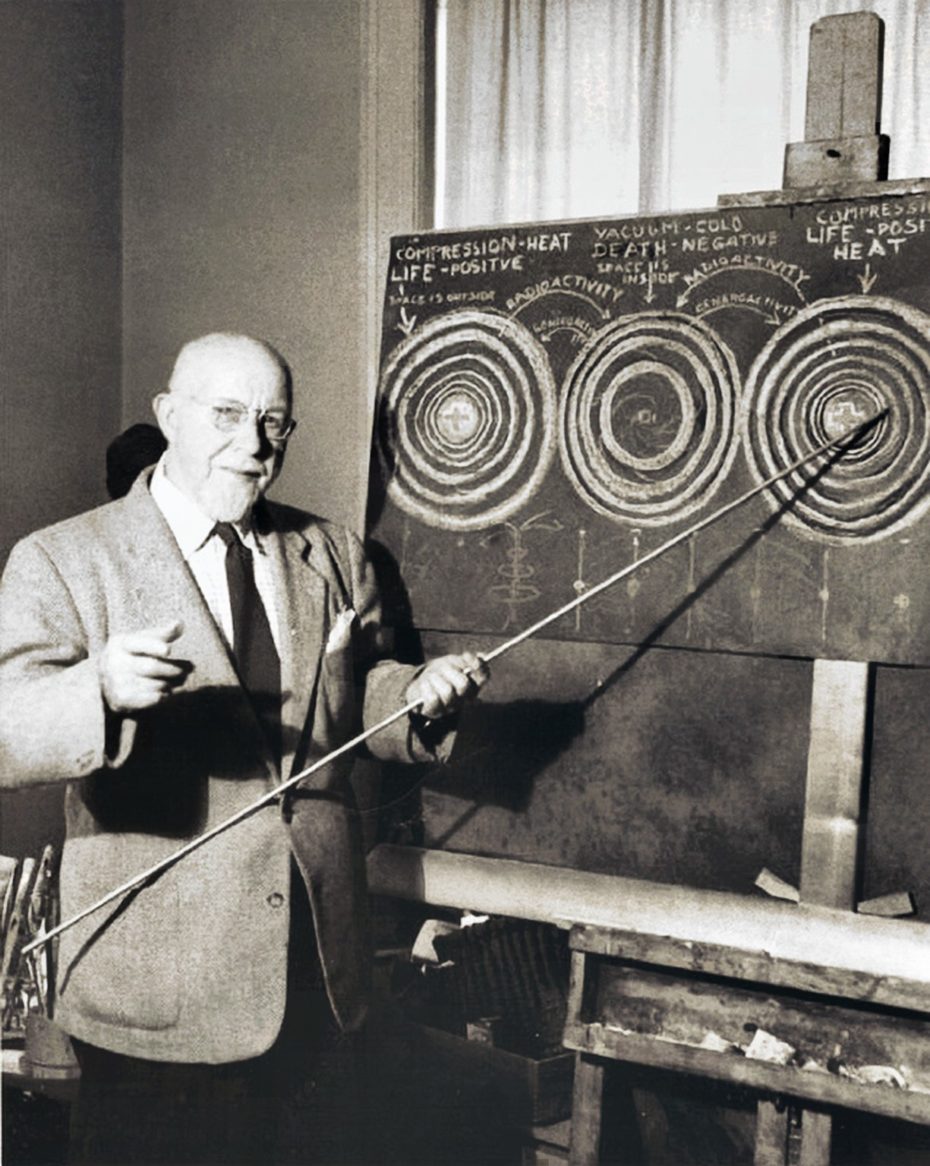
Who Was Walter Russell?
Walter Bowman Russell (1871–1963) was one of the most remarkable minds of the 20th century. He was not only an artist, sculptor, architect, and composer but also a philosopher and visionary scientist. Russell tried to unite physics, spirituality, and cosmology into one complete system. His life combined artistic brilliance with a mystical revelation that permanently changed his understanding of reality.
The 39-Day Experience Beyond Time and Space
In the spring of 1921, Walter Russell experienced what he later called “cosmic consciousness.” For 39 days, he existed in a trance-like state in which he said his awareness left time and space. During this period, he claimed to have connected with a divine source he named the “Universal Mind” or “Source of Knowledge.”
When he awakened, Russell immediately began writing down everything he had seen and understood. He described new insights about light, gravity, atoms, consciousness, and even humanity’s destiny. These writings became the foundation of his later works, which continue to challenge both science and religion.
A Wave-Based Universe of Light
Russell believed that the universe is not material but vibrational—a rhythmic wave system pulsing from one divine center. He described existence as a constant balance between compression and expansion, light and darkness, the positive and the negative—like the rhythm of breathing.
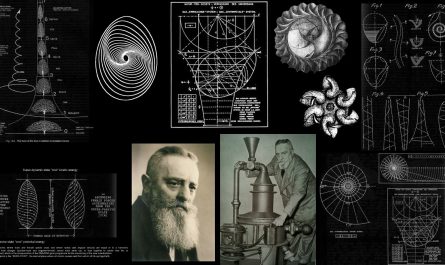
He created dozens of precise diagrams showing how chemical elements form through wave patterns. He also argued that the periodic table was incomplete and predicted several elements, including deuterium, before they were officially discovered.
Human Thought as a Creative Force
One of Russell’s core ideas was that human thought is creative, just like the mind of the Creator. He often said:
“Man is not a slave to matter—he is a co-creator with God.”
According to him, anyone who learns to think clearly and focus their consciousness can reshape reality. This principle later influenced the New Age movement and many modern teachings about manifestation and mind power.
His Most Important Works
- The Universal One (1926) – A comprehensive vision of the universe’s structure, energy, and consciousness.
- The Secret of Light (1947) – Explains that light is the creative force forming everything—from stars to human thought.
- Atomic Suicide? (1957) – A warning against the misuse of atomic energy and its destructive impact on both body and spirit.
The University of Science and Philosophy
In 1948, Walter and his wife, Lao Russell, founded the University of Science and Philosophy in Waynesboro, Virginia. It was an alternative educational institution that promoted self-development and conscious living in harmony with universal laws.
Criticism and Recognition
Mainstream scientists often dismissed Russell as a pseudoscientist, but his ideas still inspire thinkers, artists, and spiritual researchers. He is frequently compared to Nikola Tesla, and several reports claim they met and discussed the nature of light fields and cosmic energy.
Russell’s Legacy Today
Today, Russell’s books, diagrams, and theories are available in both print and digital form. His work continues to attract people who believe that the universe is not a machine but a living, conscious system of energy and light.
Memorable Quotes by Walter Russell
“Meditation is the key to the doors of the Universe.”
“Your thoughts are the tools with which you shape your world.”
“There are no accidents—everything expresses the law of energy.”