by
by 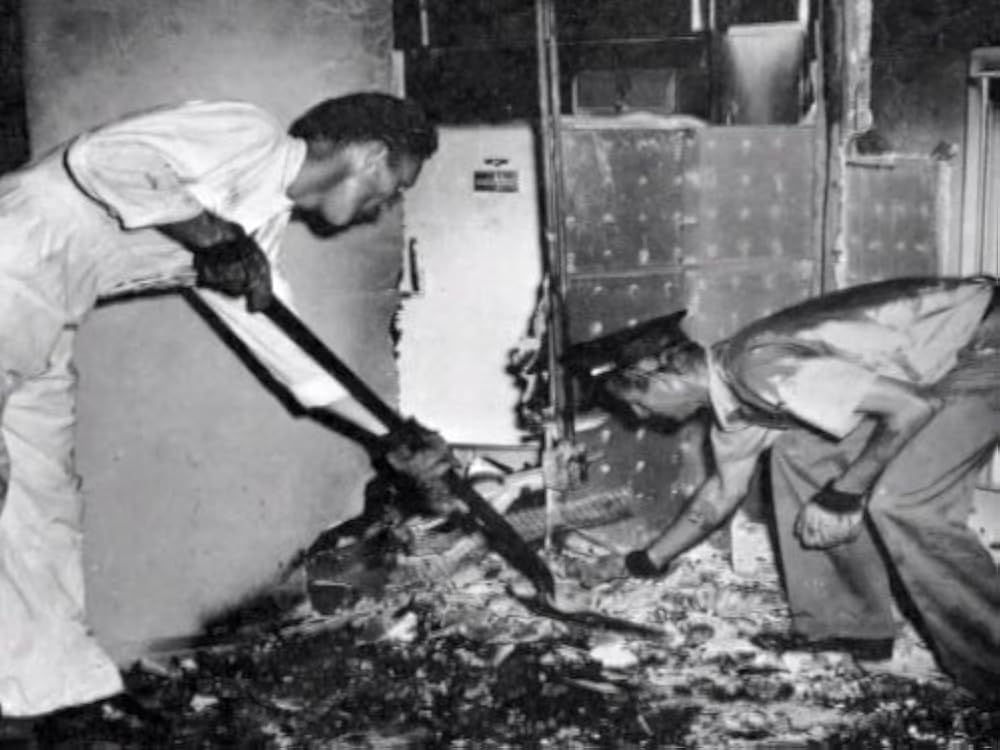
What Is Spontaneous Human Combustion?
Spontaneous Human Combustion (SHC) is one of the strangest and most debated mysteries in modern history. It describes situations in which a person appears to ignite and burn to ashes without any external fire source.
Although scientists remain skeptical, many historical cases describe victims completely consumed by fire, while the surrounding area stayed almost untouched. Because of this contradiction, the topic has continued to spark debate between scientists, skeptics, and paranormal researchers.
How Science Tries to Explain It
1. The Wick Effect – A Logical Possibility
One of the most accepted explanations is the Wick Effect. According to this idea, a small external flame—like a cigarette or candle—can set a person’s clothing on fire. Once that happens, the body fat melts and serves as fuel, while the clothes act as a wick. As a result, the body burns slowly and evenly, leaving nearby objects nearly undamaged.
This process explains why investigators often find the body reduced to ash but the surroundings intact.
2. Chemical and Metabolic Reactions
Some researchers go further and suggest that internal chemical reactions could trigger spontaneous ignition. For example, unusual metabolic processes might generate flammable gases such as methane inside the body. If those gases accumulate and ignite, they could create a short but intense burst of fire. However, no solid scientific evidence yet supports this idea.
3. Energy Fields and Unknown Forces
Others look beyond conventional science. According to paranormal researchers, electromagnetic fields, ball lightning, or even unknown energy sources might cause SHC. Although these theories lack proof, they remain popular among those who believe the universe holds energies still undiscovered by modern physics.
4. Misidentified External Ignition
Critics, on the other hand, argue that SHC is never truly spontaneous. They insist that every reported case can be explained by external causes such as dropped cigarettes, candles, or gas leaks. In many cases, unusual burn patterns or poor investigation methods make an ordinary fire appear mysterious.
Documented and Famous Cases
Mary Reeser (1951, Florida, USA)
Mary Reeser’s case became legendary. Her body was found almost entirely turned to ash, except for one foot still wearing a slipper. Surprisingly, the rest of the apartment showed only minor smoke damage. Investigators could not explain how such intense heat affected only her body.
John Irving Bentley (1966, Pennsylvania, USA)
Dr. Bentley, a 92-year-old physician, was discovered as a pile of ashes beside a single burnt hole in the floor. His walking cane remained next to him, only slightly charred. This strange contrast made his death one of the most discussed SHC cases in America.
Is Spontaneous Human Combustion Real?
Modern forensics strongly suggests that SHC is not a supernatural event. In nearly every case, investigators eventually discover an external ignition source or conditions consistent with the Wick Effect.
Nevertheless, unexplained cases continue to appear, keeping the mystery alive. For many, the phenomenon represents a reminder that human science still cannot explain everything.
Why the Mystery Endures
Despite the skepticism, the idea of people bursting into flames without warning continues to fascinate the public. It appears in novels, films, and documentaries as a symbol of the unknown power of nature and the fragility of human life.
Ultimately, spontaneous human combustion stands at the crossroads between science and mystery, forcing us to question how much we truly understand about the forces that shape our existence.
⚠️ Disclaimer: This article explores ideas and theories that are not scientifically proven or officially confirmed. The content is intended for informational and entertainment purposes only. Readers are encouraged to think critically, research independently, and form their own conclusions.