by
by 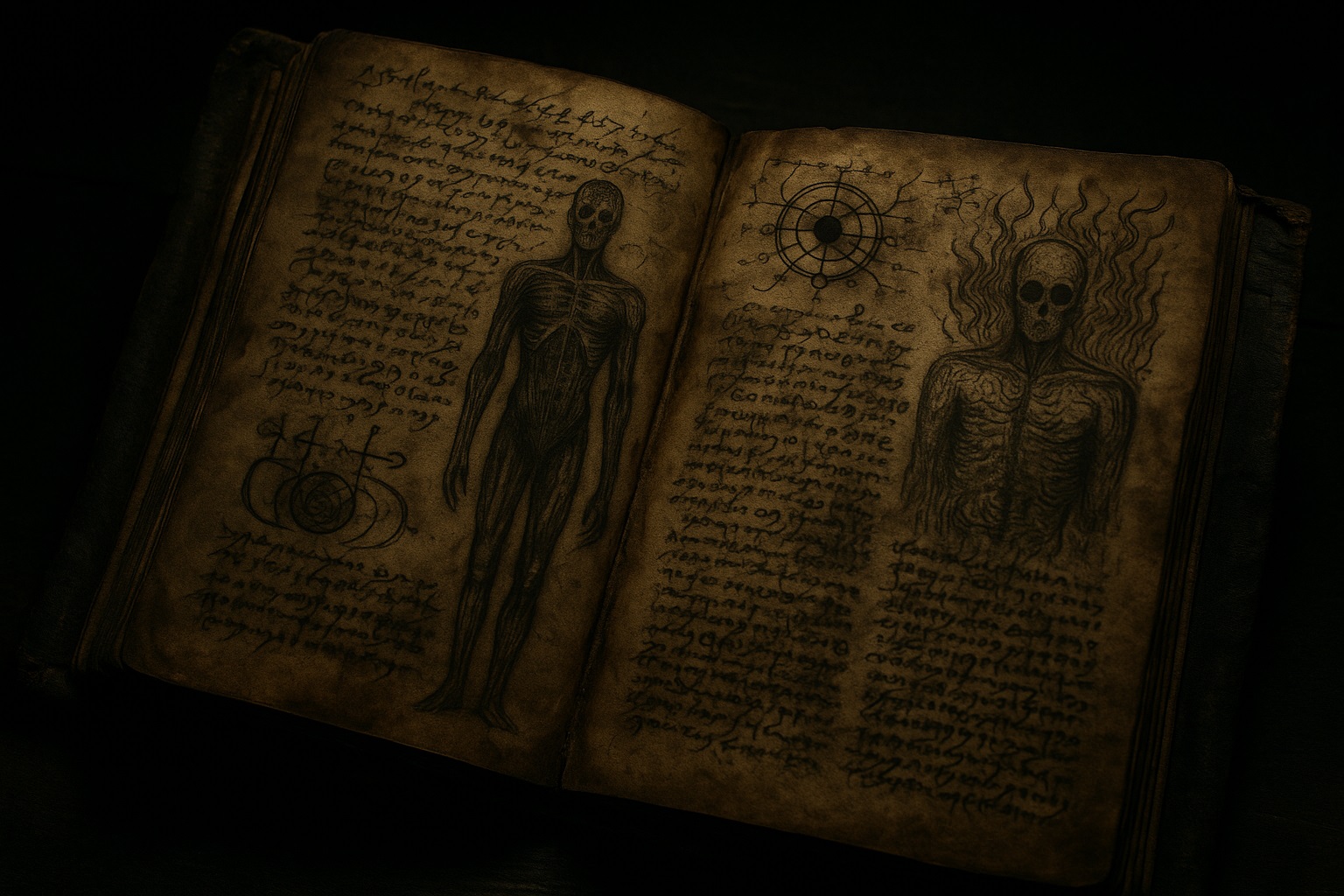
The story began in the autumn of 1990. What followed would later become one of the darkest legends on the internet: the mystery of Nathan Crowe. He was a scholar of ancient languages, celebrated at his university for his uncanny talent in deciphering even the most cryptic manuscripts. Despite his reputation, no one could have predicted that a single unmarked parcel would trigger a chain of events leading to his inexplicable disappearance.
The Anonymous Package That Changed Everything
One morning, a strange package sat on Crowe’s desk. It had no stamp, no return address, and no indication of how it entered the building. The only clue was a small yellowed note attached to the top:
“Part of what you seek is here.”
The message disturbed him. It suggested that someone knew his lifelong obsession — the search for evidence of a forgotten language or a vanished civilization.
Inside the parcel lay a leather-bound book, heavy and worn. Its pages were irregular, some coarse and brittle, others smooth and strangely warm to the touch. Instead of a single coherent style, the manuscript seemed assembled from fragments of multiple eras. More unsettling than its construction, however, was its content: strange symbols, unnerving anatomical drawings, and illustrations of creatures that defied every known system of classification.
A Manuscript That Defied All Known Reality
Crowe read for hours at a time, convinced he was uncovering a hidden truth. The text appeared to draw from multiple linguistic traditions, but none of them matched any known script. Symbols repeated in rhythmic patterns, hinting at structure, yet every attempt at translation collapsed into nonsense. The artwork resembled anatomical studies, yet the proportions and gestures looked connected to rituals no academic record had ever documented.
Over the following weeks, he noticed something even more disturbing: some pages looked centuries older than others, as if generations of authors had expanded the book piece by piece. Certain sections mapped star systems that did not appear in any astronomical database. Others depicted humanoid beings with limbs too long, eyes too dark, and torsos that bent in anatomically impossible ways.
At first, Crowe assumed the manuscript recorded an ancient myth. Gradually, he became convinced it described a reality outside human perception.
Obsession, Isolation, and the Breaking Point
Crowe’s colleagues soon grew concerned. His meals went untouched, and sleep became an afterthought. He carried torn manuscript pages everywhere and spent long nights locked in university archives, rearranging symbols on the floor like arcane puzzles.
In his private notes — scrawled hastily in the margins of research papers — he claimed that the manuscript taught an “opening process,” one that allowed access to a world running parallel to ours. He also suggested that its language was not simply ancient; it might be a deliberately obscured communication system from a civilization erased from history.
His appearance deteriorated. Crowe grew pale, shaky, and painfully thin. He whispered to friends that he felt watched. Conversations became fragmented, as if his mind was no longer anchored to the present. The book no longer inspired curiosity — it consumed him.
The Night He Vanished
One October night, Crowe disappeared. The door to his apartment was locked from the inside. When authorities forced their way in, they entered a silent room thick with dust and tension. A portion of the manuscript lay open on the table. Several pages had been torn out and burned in a metal bowl. A thin layer of black ash formed a circle in the center of the floor.
On the wall, smeared in an unidentifiable dark substance, someone had written:
“They are real.”
No trace of Crowe ever surfaced. Authorities found no body. University archives later showed no employment records. Even conference programs and publications containing his name eventually vanished. It was as if the professor had never existed.
A Legend That Refuses to Die
Despite the absence of verifiable documents, the legend of Nathan Crowe endures. Screenshots of alleged pages, grainy photos, and fragments of supposed translations circulate across obscure forums and encrypted chat groups. Each resurfacing draws new audiences: some insist the manuscript was never meant for human hands, while others dismiss the entire story as a meticulously crafted internet hoax.
Regardless of which version one believes, one fact remains undeniable:
the mystery of Nathan Crowe continues to fascinate, disturb, and inspire those who encounter it.
Somewhere — perhaps online, perhaps hidden in private collections — the manuscript he carried into silence still waits, whispering secrets in a language no human has ever truly understood.