by
by 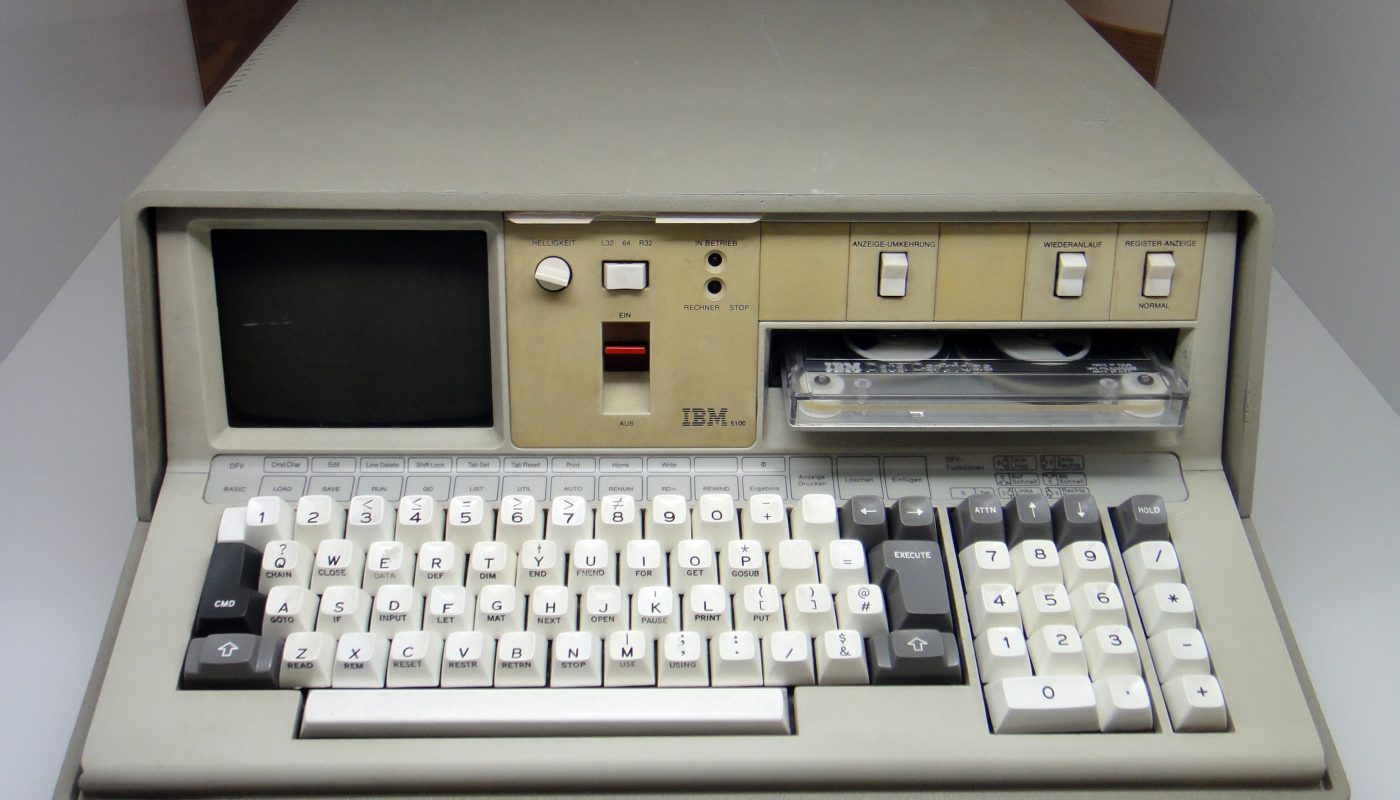
In 1975, IBM shocked the technology world when it introduced the IBM 5100 Portable Computer. At first, the machine looked like a strange metal suitcase with a small screen and a keyboard. However, behind its modest design hid a level of power that few people truly understood. Even today, its hidden capabilities continue to spark debate and fascination.
At the time, IBM promoted the 5100 as one of the world’s first portable computers. Yet in reality, the device served a far deeper purpose than the public ever realized.
The First “Portable” Computer in the World
By today’s standards, the IBM 5100 was massive. It weighed around 25 kilograms. Nevertheless, in the mid-1970s, this represented a technological breakthrough. For the first time, one person could carry a fully functional computer without relying on an entire room of equipment.
Inside a single unit, IBM packed:
- A 5-inch CRT display
- A full built-in keyboard
- A magnetic tape drive for storage
- Up to 64 KB of RAM
- Support for BASIC and APL programming
As a result, scientists, engineers, and financial analysts gained access to real computing power outside massive data centers. Although expensive, the IBM 5100 delivered performance that few other machines of its time could match.
The Hidden Capabilities No One Was Supposed to Know About
Officially, IBM described the 5100 as a workstation for BASIC and APL programming. However, engineers had quietly embedded a powerful microcode emulation layer inside the system.
Because of this hidden layer, the IBM 5100 could run software designed for massive enterprise systems. In effect, this compact machine could imitate the behavior of computers that usually filled secure government facilities and corporate data centers.
Through this hidden access, the IBM 5100 unlocked:
- Low-level system instructions
- Core diagnostic tools
- Enterprise-grade software
- Functions normally restricted to internal developers
In modern terms, the device offered something very close to kernel-level control — direct access to the deepest layers of the machine.
Why Did IBM Keep These Functions Secret?
IBM never publicly promoted these extraordinary capabilities. Instead, several powerful motivations likely drove the silence.
1. Economic Protection
If customers had discovered that a portable machine could imitate large enterprise systems, IBM’s entire business model could have collapsed. At the time, institutions paid massive sums for mainframe computers. A compact alternative with similar abilities would have placed those billion-dollar contracts at risk.
2. Security Concerns
In the 1970s, mainframes controlled critical systems such as:
- Banking transactions
- Military calculations
- Government administration
If ordinary users gained access to that level of software control, the risk of sabotage, data manipulation, and system compromise would have increased dramatically.
3. Intelligence Community Interest
Some researchers believe that government agencies understood the IBM 5100’s real capabilities from the beginning. According to these claims, officials used the machine for secure testing and verification of enterprise-level software without exposing large systems.
Although public confirmation never appeared, the secrecy surrounding the device continues to raise serious questions.
Programming on the IBM 5100
For everyday users, the IBM 5100 provided two programming languages:
- BASIC — simple, accessible, and suitable for general programming
- APL — advanced, mathematically powerful, and widely used in scientific research
On the surface, users saw only a normal workstation. Meanwhile, beneath that interface, the system operated at a much deeper technical level than IBM ever openly admitted.
What Did the IBM 5100 Really Represent?
In reality, the IBM 5100 lived in two separate worlds.
On one hand, IBM marketed it as a compact professional workstation. On the other hand, its internal design allowed it to operate as a bridge to massive enterprise systems.
This contradiction leads to one unavoidable question:
Did IBM deliberately hide the true power of the IBM 5100 from the public?
Many experts believe that only select institutions received full disclosure. Meanwhile, ordinary customers worked with only a fraction of the system’s true capabilities.
The Legacy of the IBM 5100
Today, collectors view the IBM 5100 as a priceless artifact of early computing history. More importantly, its story delivers several powerful lessons:
- Technology often surpasses what companies reveal to the public
- Economic and security interests strongly shape innovation
- Small machines can conceal astonishing power behind simple designs
The IBM 5100 stands as much more than an old portable computer. It represents a moment where advanced technology, secrecy, and control quietly intersected. Even now, its hidden story reminds us that the most powerful functions often remain unseen — reserved for only a select few.