by
by 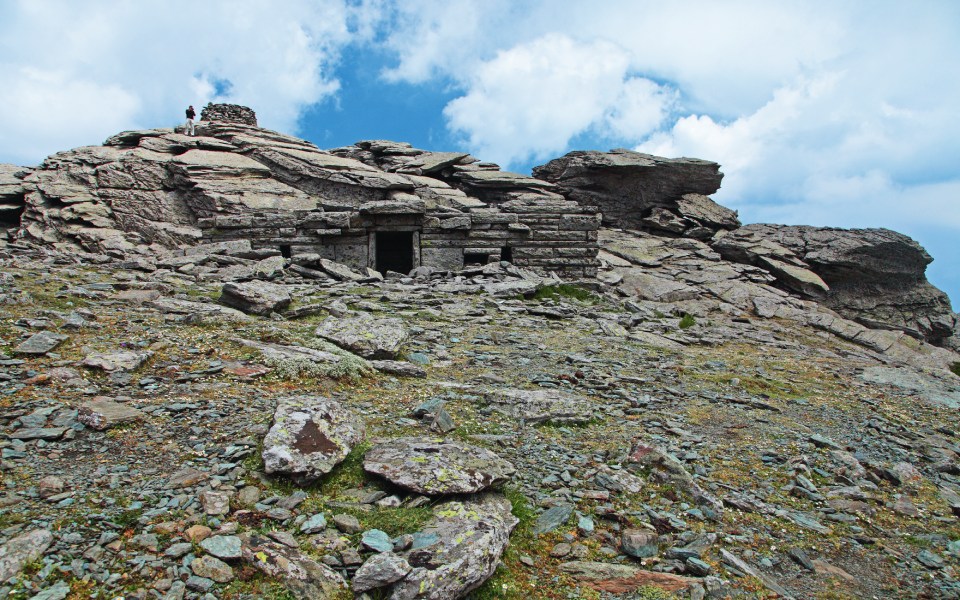
In the southeastern part of the Greek island of Euboea, near the coastal town of Karystos, rises Mount Ochi (Greek: Όχη) — a dramatic peak reaching 1,398 meters above sea level. Wrapped in legends, isolation, and raw natural beauty, this mountain is home to one of Greece’s most enigmatic ancient structures: the Dragon Houses, known locally as Drakóspita.
Ancient Giants of Stone
The Dragon Houses are a group of more than twenty megalithic structures scattered across southern Euboea. They are built entirely from massive stone blocks, assembled without mortar, cement, or any binding material. The precision of the construction is so remarkable that the buildings have survived for centuries, resisting earthquakes, wind, and time itself.
Their roofs consist of multi-ton stone slabs, carefully layered in a corbelled style that resembles enormous natural panels locked together. The scale and engineering behind these structures continue to challenge conventional explanations of ancient construction techniques.
The Enigma of Mount Ochi
The most impressive Dragon House stands near the summit of Mount Ochi, at approximately 1,389 meters above sea level. Measuring around 12.7 × 7.7 meters, with walls over one meter thick, the structure dominates the surrounding landscape. From this height, sweeping views open across southern Euboea and the Aegean Sea.
The choice of location appears deliberate. The altitude, isolation, and commanding visibility suggest that the site held symbolic, strategic, or ritual significance for its builders. Even today, the atmosphere at the summit feels solemn and otherworldly.
Who Built the Dragon Houses?
Despite extensive study, no definitive consensus exists regarding the origin or purpose of the Dragon Houses. Archaeologists and historians have proposed several theories:
- Religious sanctuaries, possibly dedicated to Zeus or Hera
- Watchtowers used to control maritime or land routes
- Shelters or storage buildings linked to ancient mining activities
The absence of inscriptions or written records makes precise dating difficult. Some estimates place their construction in the 7th century BCE, while others suggest a Hellenistic or even Roman-era origin. Each theory raises as many questions as it answers.
Legends of the “Dragons”
The name Drakóspita, or “Dragon Houses,” originates from local folklore. In ancient Greek, the word drákōn did not refer solely to dragons as mythical beasts. It could also describe powerful supernatural beings or giants, endowed with extraordinary strength.
Local traditions claim that only such beings — “stone dragons” — could have lifted and positioned blocks of such immense size. These legends, passed down through generations, reflect humanity’s attempt to explain architecture that seemed far beyond ordinary human capability.
Visiting the Site Today
Today, the Dragon Houses attract archaeologists, historians, hikers, and travelers drawn by mystery and untouched landscapes. Reaching the summit of Mount Ochi requires a demanding hike along rocky and steep terrain. Visitors are advised to bring water, sturdy hiking shoes, and suitable clothing.
Those who make the journey are rewarded with breathtaking views, deep silence, and a powerful sense of standing at the crossroads of history and myth.
Where Myth and Science Converge
The Dragon Houses of Mount Ochi represent a rare fusion of engineering mastery, natural forces, and ancient imagination. They stand as silent witnesses to civilizations whose knowledge, intentions, and capabilities remain only partially understood.
In this place, myth does not oppose science — it complements it. Together, they remind us how much of humanity’s distant past still lies hidden, waiting to be rediscovered.