by
by 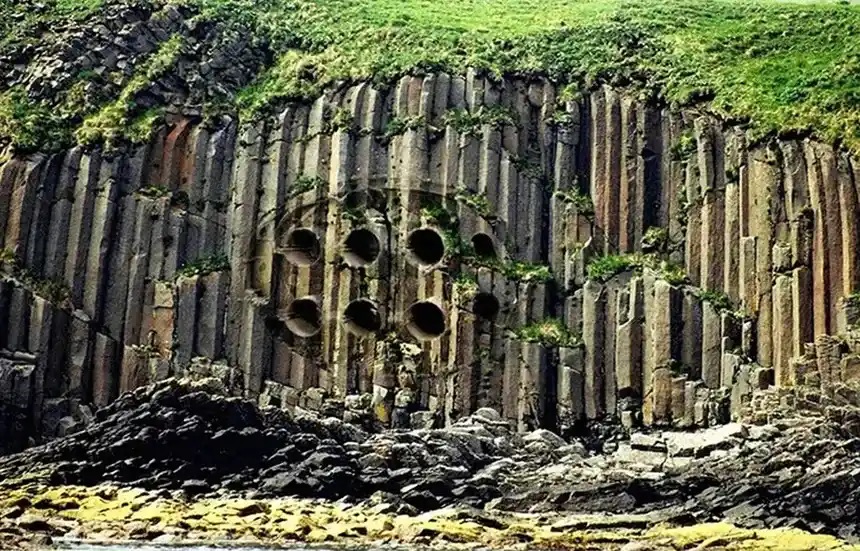
A Mysterious Discovery in Qinghai Province
In north-western China, in Qinghai Province, near Baigong Mountain and Lake Toson, researchers encounter one of Asia’s most debated archaeological anomalies — the Baigong Pipes. These structures physically exist, have been documented on site, and remain accessible for scientific examination. Nevertheless, despite repeated studies, experts have not reached a universally accepted explanation for their origin.
Structure and Geometric Precision
The pipes appear as hollow cylindrical formations embedded directly into rock. Each displays a uniform diameter and a precise circular shape. Some extend deep into solid stone, others continue underground, and several align toward the nearby lake. As a result, the overall arrangement suggests a deliberate system, rather than a random geological phenomenon.
Moreover, geologists emphasize that natural erosion and mineral deposition rarely produce parallel hollow structures with such consistent geometry. Therefore, the physical characteristics of the Baigong Pipes reinforce their status as an archaeological anomaly.
Material Composition and Unidentified Elements
Laboratory analyses show that the pipes consist primarily of iron oxide, silicon dioxide, and calcium oxide. Notably, approximately 8% of the material remains unidentified. This unknown component represents one of the strongest obstacles to classifying the pipes as a purely natural formation. Meanwhile, dating attempts continue to yield inconsistent results; however, several studies indicate a very ancient origin, potentially thousands of years old.
A Direct Challenge to Official History
To create structures of this type, a civilization would require advanced metal-processing knowledge, engineering planning, technology capable of producing hollow cylindrical forms, and a clear functional purpose. Yet archaeologists have not discovered evidence of any civilization in this region that possessed such capabilities during the proposed time period. Consequently, this contradiction continues to fuel academic and scientific debate.
Official Interpretation and Its Limitations
Official explanations attribute the Baigong Pipes to natural geological processes. However, this interpretation faces serious limitations. Nature does not typically create large numbers of hollow pipes with identical diameters, arrange them in a consistent directional pattern, or produce formations that resemble functional infrastructure. In contrast, the observed characteristics imply intentional organization, rather than coincidence.
Alternative Interpretations
For this reason, independent researchers cautiously explore alternative possibilities. These include a lost ancient civilization, an early technical system possibly linked to water or mineral transport, or an unknown technological tradition that does not align with established historical timelines. Although none of these hypotheses has received official confirmation, researchers have not conclusively disproven them either.
Why the Baigong Pipes Matter
Ultimately, the importance of the Baigong Pipes lies in several key facts. They physically exist, allow direct examination and laboratory analysis, and challenge conventional models of historical and technological development. They do not overturn history; instead, they reveal that the current historical framework remains incomplete.
The Baigong Pipes are not sensationalism. Rather, they represent an open scientific question that highlights the limits of modern knowledge. Therefore, they invite deeper inquiry, critical evaluation, and a more open-minded approach to humanity’s earliest past.