by
by 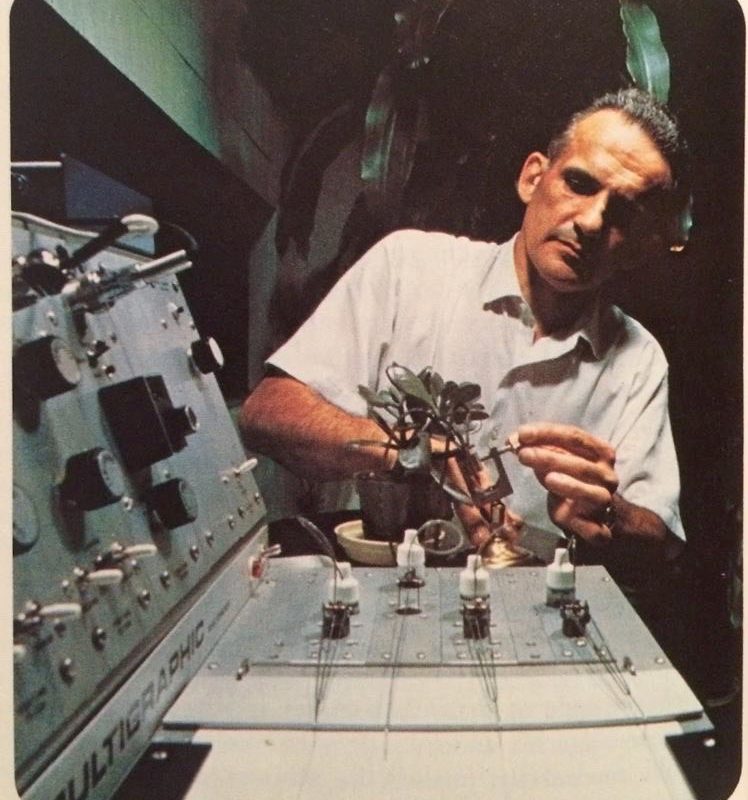
In 1966, American polygraph expert Cleve Backster performed an experiment that challenged what people thought they knew about plants. He connected a lie detector electrode to a plant’s leaf to check for electrical reactions. The plant didn’t respond to water or touch, but when Backster imagined setting the leaf on fire, the polygraph showed a sudden electrical spike—similar to a human fear response. This reaction appeared before any action took place—purely from his intention.
The Theory of Primary Perception
After this event, Backster introduced the idea of Primary Perception—the instinctive ability of living organisms to sense information beyond normal senses. He believed this awareness operated outside time and space and connected all forms of life. He later observed similar reactions in bacteria, human cells, and even sperm samples. Backster suggested that life might share a subtle awareness system, like a nervous network that works in a different form.
Observations During Experiments
Backster noticed that plants reacted to human emotions, especially when a person had frequent contact with them. In one test, he burned a leaf on one plant. At that same moment, another plant in a different room showed a similar electrical signal. He took this as proof of an invisible information field connecting living beings—something that reminded him of quantum entanglement in physics.
Scientific Reaction and Criticism
The public loved Backster’s discoveries, but the scientific community remained doubtful. Critics said his tests lacked controlled methods and repeatable results. They argued that static electricity, temperature changes, or even his presence might have affected the polygraph. Because of this, major scientific journals didn’t accept his research. Yet his ideas left a lasting cultural influence.
Public Resonance
In 1973, The Secret Life of Plants made Backster’s experiments famous worldwide. The book became a bestseller and inspired thousands of people to explore how thoughts, emotions, and music affect plants. Many played classical or rock music, spoke kindly, or meditated near their plants, trying to form a connection with nature.
The Modern View of Plant Sensitivity
Modern science now recognizes that plants are far more responsive than once believed. They react to touch, light, sound, chemicals, and vibrations. Plants even communicate by releasing airborne chemicals or sending signals through roots, warning others of danger. This new field—plant neurobiology—studies how plants process signals, though scientists stop short of saying they “think” or “feel” like humans. Still, Backster’s work was the first popular attempt to show that plants and humans might share a conscious connection.
What It Teaches Us
Cleve Backster’s experiment wasn’t just a scientific test—it was a philosophical challenge to how we see life. Even if science doesn’t fully accept his results, his message stays relevant: we may all be part of a living network, where every thought and emotion influences not only people but also nature itself. This idea continues to inspire gardeners, thinkers, and researchers, reminding us that awareness could reach far beyond the human mind.