by
by 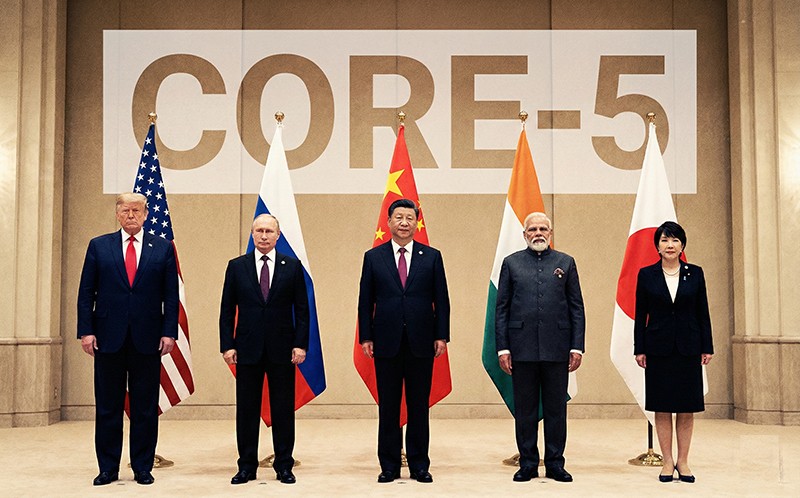
The global political landscape is undergoing a profound transformation. Traditional alliances that once defined international order are increasingly questioned, and new power structures are emerging. One of the most debated concepts to surface recently is the “Core 5” alliance, often referred to as C5 — a proposed framework that could redefine how global decisions are made.
This idea reflects a broader shift toward a multipolar world, where power is no longer concentrated in a single bloc but distributed among several dominant actors.
What Is the Core 5 Alliance?
The Core 5 concept revolves around the idea of bringing together five of the world’s most influential states into a single strategic forum. The proposed members are:
- United States
- China
- Russia
- India
- Japan
These countries represent the largest concentrations of military capability, economic power, technological influence, and population on the planet. Unlike existing alliances built on shared ideology or political systems, Core 5 would be grounded in pragmatic power realities.
Why Did the Core 5 Idea Emerge Now?
In recent years, dissatisfaction with existing global formats has grown. Critics argue that institutions such as the G7 no longer reflect the true balance of power in the modern world. Economic growth, demographic shifts, and geopolitical realignments have weakened the effectiveness of older structures.
The Core 5 proposal emerges as a response to these changes. Instead of focusing on values or political alignment, it prioritizes capability, influence, and strategic relevance. Supporters see it as a more realistic platform for addressing today’s global challenges.
Potential Areas of Cooperation
If implemented, the Core 5 framework would likely focus on issues where these five powers exert decisive influence, including:
- Global security and military stability
- Large-scale regional conflicts
- Energy resources and supply chains
- International trade and economic coordination
- Advanced technologies, including artificial intelligence
By limiting participation to a small number of decisive actors, the alliance could theoretically enable faster decision-making and more direct negotiations.
Criticism and Strategic Risks
Despite its appeal, the Core 5 concept has drawn significant criticism. Many analysts warn that such a structure could:
- Marginalize smaller states from global decision-making
- Undermine multilateral institutions
- Shift global governance toward an elite power club
- Ignore democratic values in favor of raw influence
Additionally, deep strategic rivalries exist among the proposed members themselves. Conflicting interests, historical tensions, and competing regional ambitions raise doubts about whether long-term cooperation would be sustainable.
Is Core 5 an Official Alliance?
At this stage, Core 5 is not an official organization or treaty-based alliance. It remains a strategic concept discussed within political and analytical circles. However, the seriousness with which it is debated suggests that major powers are actively exploring alternatives to the current global order.
Even as a theoretical model, Core 5 reflects the reality that the world is moving away from post-Cold War structures toward a more fragmented but power-driven system.
What Does This Mean for the Future?
The rise of the Core 5 concept signals a deeper transformation in global governance. Power is consolidating around a small number of states capable of shaping outcomes independently of traditional institutions. Whether or not Core 5 becomes a formal alliance, its logic already influences international strategy.
The world is entering an era where influence outweighs ideology, and where global order is shaped less by consensus and more by strategic weight.
Conclusion
The Core 5 alliance represents a bold and controversial vision of future global cooperation. While it remains an unformalized idea, it highlights the growing recognition that existing power structures may no longer be sufficient. As geopolitical tensions rise and multipolar competition intensifies, concepts like Core 5 may become increasingly central to how the world is governed.
Whether embraced or resisted, the idea itself confirms one thing: the global order is changing — and rapidly.