by
by 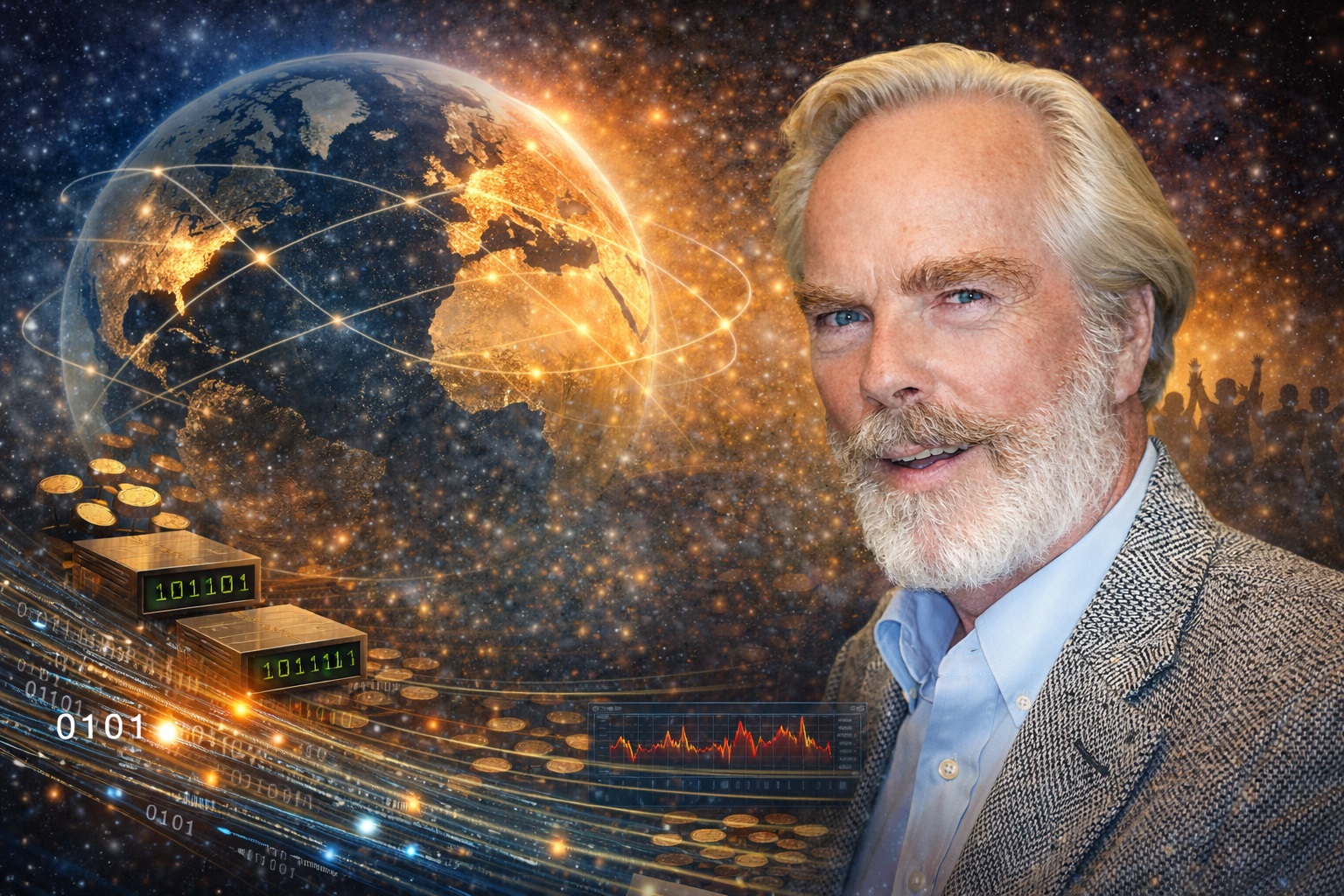
Dr Roger Nelson is an American cognitive scientist whose work is closely associated with research into global consciousness and collective human attention. His research focuses on a long-standing scientific question that continues to generate debate within academic circles: whether shared human emotions, thoughts, and attention can correlate with statistically measurable changes in processes that are theoretically considered purely random.
These studies are not based on belief systems or philosophical assumptions but rely on long-term data collection, statistical analysis, and careful scientific interpretation, adhering to established research standards.
What Is the Idea of Global Consciousness
The concept of global consciousness is based on the hypothesis that humanity may function as an interconnected system, rather than as isolated individuals. In the modern world, information, emotions, and reactions spread almost instantly, especially during major global events. In such moments, millions of people experience similar emotional states simultaneously, such as shock, fear, grief, or collective focus.
The central scientific question is whether this synchronization of collective attention can manifest as a measurable effect in systems that have no direct connection to human consciousness.
Experimental Methodology
In Dr Roger Nelson’s research, devices generating random numbers based on physical noise processes were used. Under normal conditions, such systems are expected to produce stable random distributions with no structure or patterns.
Data were collected continuously, over long periods of time and from multiple locations worldwide, allowing researchers to compare ordinary statistical background noise with periods during which globally significant events occurred and attracted widespread public attention.
Special care was taken to ensure that analysis criteria were defined in advance, reducing the risk of retrospective interpretation or bias.
Observed Results
Long-term data analysis showed that in certain cases coinciding with major world events, the distribution of random data exhibited statistically significant deviations from expected norms. These deviations were not constant and did not appear during everyday conditions. Instead, they occurred during specific moments characterized by strong collective emotional engagement.
It is important to emphasize that these results were not interpreted as direct evidence that human consciousness alters physical reality. Rather, they were treated as correlations, suggesting that current scientific models of randomness and collective systems may be incomplete.
Scientific Interpretation
From a scientific perspective, Dr Roger Nelson consistently emphasized that correlation does not imply causation. He did not claim that human thoughts or emotions directly influence physical systems. Instead, he proposed that such observations may reflect the behavior of complex systems, where many interacting variables produce effects not yet fully explained by classical models.
This cautious interpretation aligns with accepted scientific principles and distinguishes this research from speculative or non-scientific claims.
Criticism and Limitations
Global consciousness experiments have faced scientific criticism. Skeptics point to potential statistical artifacts, data selection effects, and subjective interpretation risks. These critiques are a fundamental part of the scientific process, and Dr Roger Nelson regarded them as essential for improving research quality.
He repeatedly stated that these findings should be viewed not as final proof, but as an open research field requiring further independent studies and theoretical development.
Significance in Modern Science
Dr Roger Nelson’s work is significant because it expands the boundaries of scientific discussion, introducing consciousness as a possible variable in the analysis of complex global systems. While his research does not overturn established laws of physics or statistics, it has encouraged interdisciplinary dialogue among psychology, statistics, systems theory, and consciousness research.
Dr Roger Nelson’s global consciousness research should not be understood as a proven theory, but as a scientific attempt to explore the influence of collective human processes on the world. It raises a fundamental question about whether humanity, as an interconnected system, can produce effects that modern science is only beginning to investigate.
This approach invites broader thinking while maintaining critical reasoning, scientific discipline, and openness to future research.