by
by 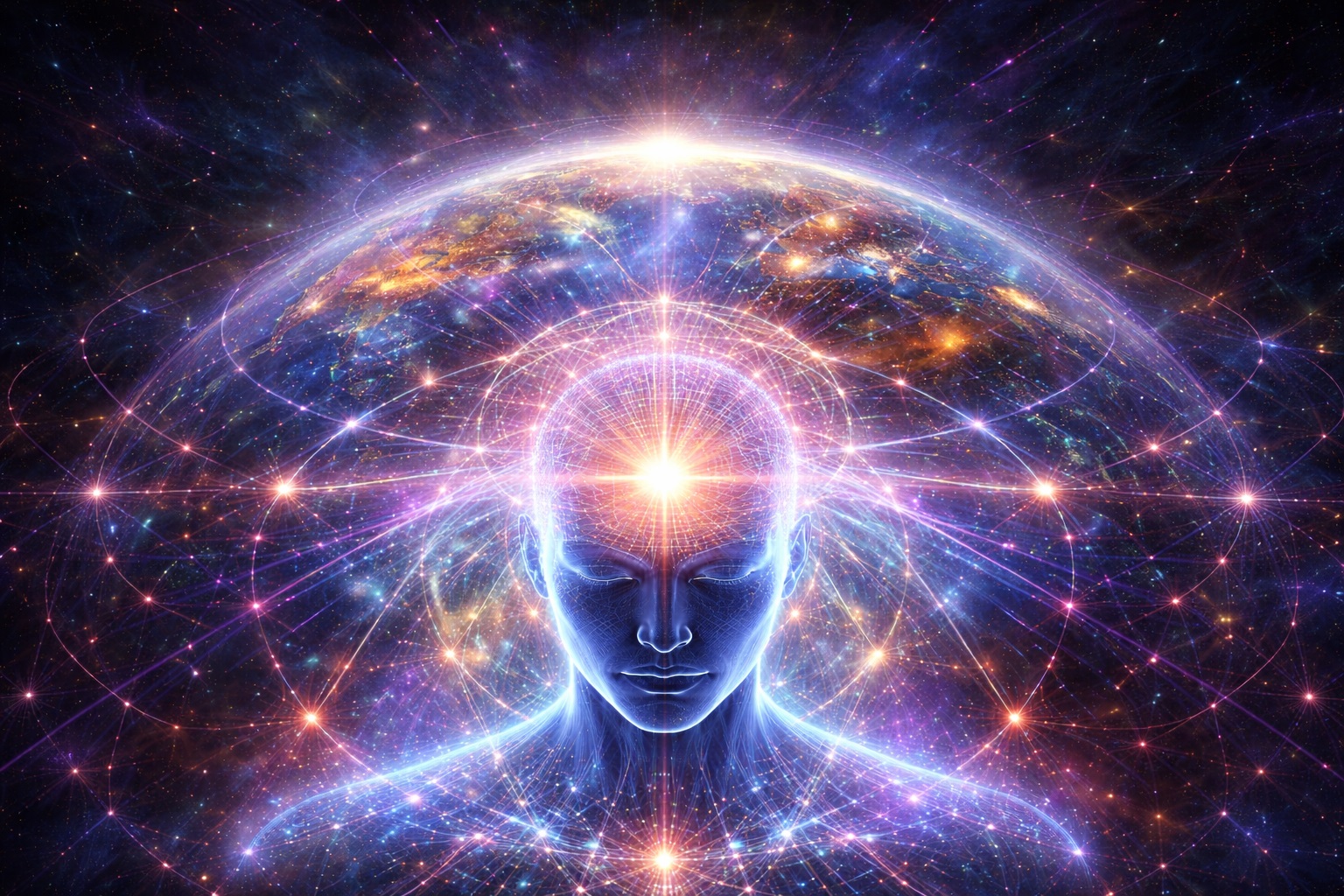
We usually think of ourselves as separate individuals, each living inside our own thoughts and emotions. However, the Global Consciousness Theory offers a very different perspective: it suggests that humanity may be connected through a shared field of collective consciousness, where thoughts, emotions, and intentions move beyond the individual and subtly influence others. This idea raises a powerful question: how separate are we really, and how much are we part of one unified mind?
The Essence of the Theory
The Global Consciousness Theory is based on the idea that above individual awareness exists a larger informational field. Into this field flow human emotional energy, mental signals, and subtle impulses that blend together and create a common environment of meaning. This field can be imagined as an invisible network, where consciousness is not confined to the physical body. Phenomena such as synchronicity, collective mood shifts, and unusual global coincidences are seen as reflections of this shared field.
Collective Reaction to Global Events
History shows that during powerful global events, people around the world often respond simultaneously. Natural disasters, tragic incidents, sudden moments of crisis, or global celebrations create a strong emotional wave that seems to connect millions of people at once. In these moments, humanity behaves almost like a single organism, with a shared emotional system reacting to events in unison. Some believe that this collective energy can influence social behavior, decision-making, and even the direction of world events.
Collective Unconscious and Human Memory
Many psychological and philosophical traditions describe the existence of a collective unconscious, a deep reservoir of archetypes, symbols, and universal patterns shared across cultures and historical periods. This layer connects humanity beyond language and geography. The Global Consciousness Theory expands this idea, suggesting that not only symbolic patterns but also emotional impulses, intuitive signals, and energetic information may arise from a common source. This could explain why people sometimes sense things without logical explanation or experience meaningful coincidences.
Emotions as Energy
In this view, emotions are not merely private inner states but a form of energy that radiates beyond the individual. Strong emotions such as fear, anger, hope, or inner peace may create collective waves that influence the mindset of society. This concept helps explain why global moods sometimes shift dramatically or why entire populations seem to experience similar states of tension or calm. Emotions here become a global force, shaping humanity’s shared psychological atmosphere.
The Influence of the Digital World
Today, humanity is connected more quickly and deeply than ever before. Information and emotions spread within seconds, strengthening and accelerating the formation of a collective consciousness. Digital platforms create a shared psychological rhythm, where millions of people feel, react, and interpret events almost simultaneously. This intense synchronization supports the idea that we already function as a unified mental network.
Criticism and Open Questions
The theory has its critics. Many argue that collective consciousness is difficult to measure and that direct scientific proof is limited. However, persistent global patterns—such as sudden shifts in public mood, widespread synchronicities, and unexpected alignment of behavior — continue to spark curiosity and debate. These open questions suggest that the human mind may be far more interconnected than traditional science has acknowledged.
What It Means for the Individual
If the Global Consciousness Theory is even partially true, then every thought, emotion, and intention becomes a signal influencing the collective field. This means we are not isolated beings — we are part of a larger system, where our inner state resonates far beyond our personal lives. Calmness, awareness, and emotional clarity take on global significance, shaping the atmosphere experienced by others.
Conclusion
The Global Consciousness Theory offers a fascinating view of humanity — not as separate individuals, but as interconnected parts of a vast mental ecosystem, where every thought contributes to a shared reality. It challenges us to reconsider who we are, how we relate to one another, and how much influence we truly have. Perhaps the important question is not whether the theory is fully proven, but what humanity could achieve if we consciously embraced the power of our collective mind.