by
by 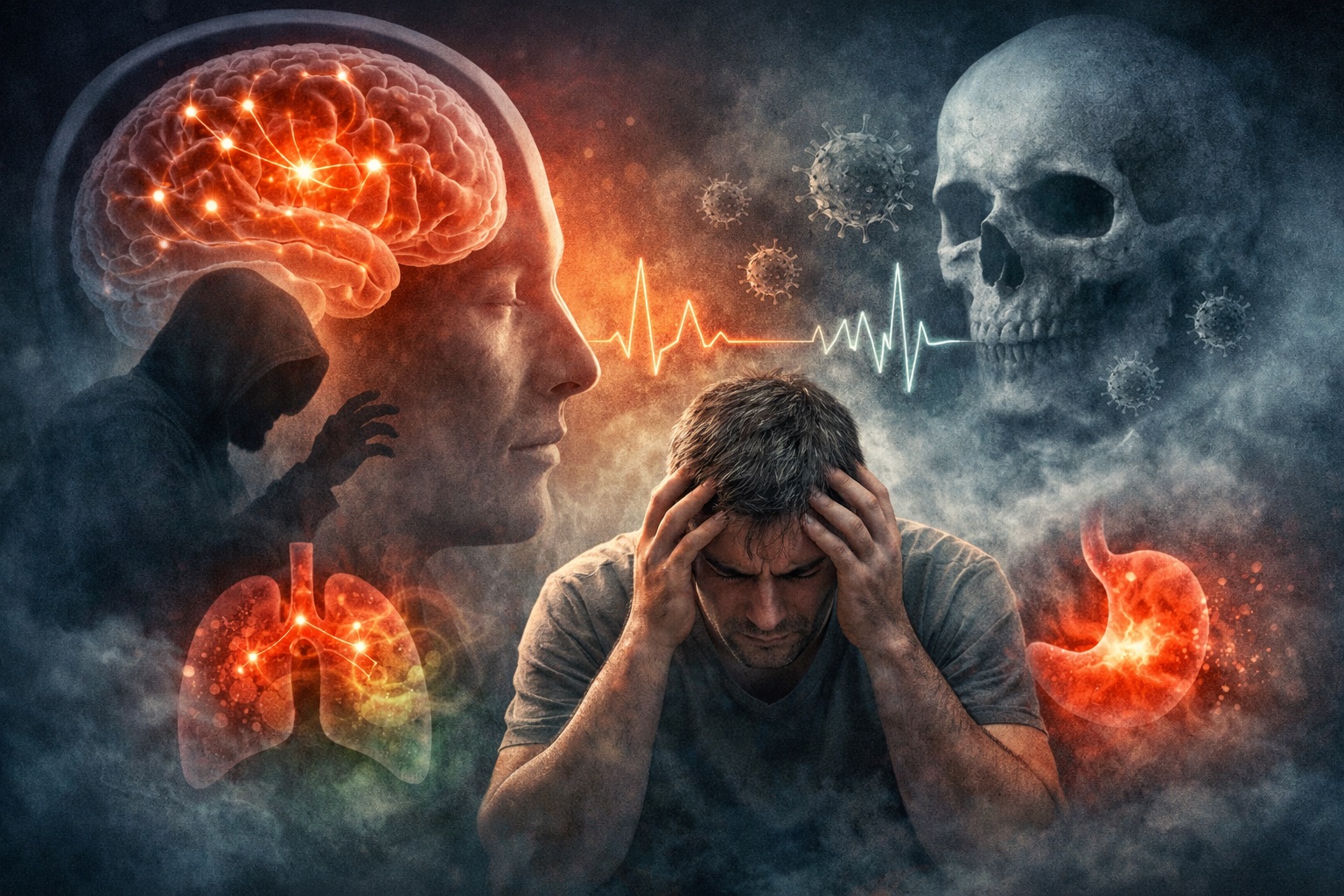
The human body is not separate from the mind and the nervous system. The subconscious mind constantly influences the body through hormones, muscle tension, breathing patterns, and internal perception. When the subconscious continuously perceives danger, the body begins to function in a different mode.
A state of illness does not always begin with bacteria or viruses. In many cases, it begins with an internal signal that something is unsafe. This signal may arise from the information environment, emotional stress, or social influence.
The Subconscious as a Biological Regulator
The subconscious mind regulates automatic processes such as breathing, heart rate, digestion, immune responses, and muscle tone. It operates continuously, even when a person is not consciously aware of it.
The subconscious cannot clearly distinguish between real and imagined threats. If information is perceived as dangerous, the body reacts as if the threat is real. This survival mechanism was once essential for protection, but in modern life it can become a source of imbalance.
Formation of the Illness Idea in the Subconscious
A state of illness often begins when a person accepts the idea that their body is weak or vulnerable. This belief may develop gradually and almost invisibly.
When a person repeatedly hears that certain sensations indicate illness, the subconscious begins associating those sensations with danger. Over time, even minor discomfort can trigger a stress response. The idea becomes an internal program.
Focus on Bodily Sensations
The body constantly produces signals. Under normal conditions, most of these signals remain unnoticed. However, when attention becomes strongly focused on the body, these sensations intensify.
The subconscious may begin interpreting neutral sensations as threats. A normal heartbeat becomes a disturbance. A slight change in breathing feels abnormal. Temporary fatigue is perceived as a symptom of disease. This creates a self-reinforcing loop.
This mechanism forms the foundation of many psychosomatic symptoms.
Fear and Nervous System Overload
Without fear, a chronic illness state rarely develops. Fear activates the stress system and overloads the nervous system. Muscles remain tense. Breathing becomes shallow. Thoughts repeat in cycles.
In prolonged stress mode, the body consumes more energy and restores less. This may lead to chronic fatigue, sleep disturbances, concentration problems, and emotional exhaustion.
These symptoms are real, even when no structural damage is present.
Why People Frequently Become Ill
Many individuals experience repeated illness not because their bodies are inherently weak, but because the subconscious operates in a continuous state of perceived threat. The body does not receive a signal that it is safe to recover.
In this condition, even mild stress can trigger symptoms. Illness appears to return again and again because the underlying internal program remains unchanged.
Incorrect Subconscious Signaling to the Body
When the subconscious repeatedly sends danger signals, the body responds defensively. Muscles tighten. Digestion slows. The immune system loses balance.
The organism remains in a constant fight or flight mode. This state is not designed for long-term living. Over time, functional disturbances may appear.
Internal Conflict and Physical Symptoms
Often, there is a conflict between the conscious and subconscious mind. A person may believe everything is fine while internally feeling tension, insecurity, or suppressed fear.
This internal conflict creates ongoing nervous system strain. It may manifest as headaches, digestive issues, heart rhythm irregularities, skin reactions, or persistent fatigue. Symptoms may shift, but the core imbalance remains.
The Subconscious and Immunity
The immune system is closely connected to the nervous system. When the nervous system remains chronically stressed, immune efficiency may decline.
As a result, a person may become more vulnerable to infections, inflammation, or prolonged health disturbances. This does not necessarily mean the immune system is defective. It often reflects a lack of internal safety and regulation.
Illness as a Signal
In many cases, illness is not punishment and not random. It can be a signal that the subconscious system is overloaded and the body requires change.
If these signals are ignored, symptoms may intensify in order to demand attention.
Conclusion
The subconscious mind is not an enemy. It simply reacts to the signals it receives. When those signals are dominated by fear and perceived danger, the body adapts for survival rather than recovery.
When the subconscious receives signals of safety, the organism can gradually return to balance and restoration.
Health does not begin only in the body. It begins in the sense of internal safety, emotional regulation, and nervous system stability.