by
by 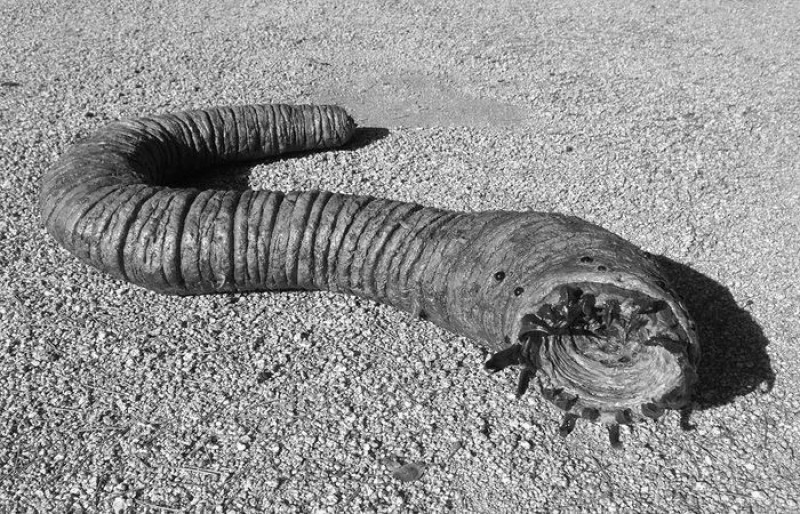
The Gobi Desert is one of the harshest and least explored regions on Earth. Its vast open landscapes, extreme temperature fluctuations, and minimal human presence create conditions where ancient legends and unexplained phenomena can persist for centuries. One of the most intriguing of these is Olgoi-Khorkhoi, a mysterious creature deeply rooted in Mongolian folklore.
Stories about this being have been passed down through generations, existing at the boundary between legend, eyewitness testimony, and possible biological reality.
Origin of the Name
The name Olgoi-Khorkhoi originates from Mongolian words meaning “intestine” and “worm.” This unusual name reflects the creature’s reported appearance — a long, cylindrical, worm-like body with no visible limbs or distinct head.
Historical Accounts
For centuries, nomadic herders and travelers have spoken of a strange creature living beneath the sands of the Gobi Desert. These accounts were traditionally treated as real observations rather than symbolic myths.
In the early twentieth century, Western explorers and researchers began documenting these reports after noticing their consistency across different regions and generations. Despite multiple expeditions and investigations, no physical remains or verified specimens have ever been found.
Physical Description
According to repeated eyewitness descriptions, Olgoi-Khorkhoi measures approximately 50 to 150 centimeters in length. Its body is described as smooth and glossy, with coloration ranging from dark red to brown or purplish tones. The creature reportedly has no visible eyes, limbs, or clearly defined head.
Movement is described as serpentine or worm-like. Most reports suggest that the creature spends nearly its entire life underground, emerging only under rare environmental conditions such as rainfall or increased humidity.
Neutral Interpretation: The Ecological Hypothesis
The ecological hypothesis offers a cautious and rational explanation for the Olgoi-Khorkhoi phenomenon. Rather than framing the creature as a monster or supernatural entity, this interpretation considers it a potential example of an unknown or poorly understood biological organism adapted to extreme desert environments.
This hypothesis suggests that the creature may live almost exclusively underground, where temperatures are more stable and resources are conserved. A slow metabolism could allow survival in conditions with minimal food and water. Surface appearances may be triggered by specific environmental factors such as moisture, vibration, or atmospheric pressure changes.
In this framework, Olgoi-Khorkhoi is not a threat, but a possible relict species or a rare biological anomaly.
Ecological Context
Although the Gobi Desert appears barren, it contains complex underground ecosystems. Beneath the surface exist insects, worms, reptiles, small mammals, and microorganisms adapted to extreme conditions. If Olgoi-Khorkhoi exists, it could belong to this hidden ecological network, remaining undetected due to its isolated and subterranean lifestyle.
Why No Physical Evidence Exists
The lack of physical evidence does not necessarily invalidate the accounts. Several factors may explain this absence, including the immense size and remoteness of the desert, the rarity of surface appearances, the creature’s underground habitat, and the limited number of scientific studies focused on subsurface desert life.
Together, these factors significantly reduce the likelihood of direct observation or documentation.
Cultural Significance
Within Mongolian culture, Olgoi-Khorkhoi symbolizes respect for nature and the unknown. It serves as a reminder that not all elements of the natural world are fully understood or controlled by humans. The legend encourages caution, humility, and awareness in an environment where survival depends on understanding and respect for natural forces.
Conclusion
Olgoi-Khorkhoi exists at the intersection of folklore and possible biology. Through the lens of the ecological hypothesis, it can be viewed not as a mythical monster or pure fiction, but as a reflection of humanity’s incomplete knowledge of life in extreme environments. Whether literal or symbolic, the legend continues to challenge assumptions about what may still exist beyond the limits of human observation.