by
by 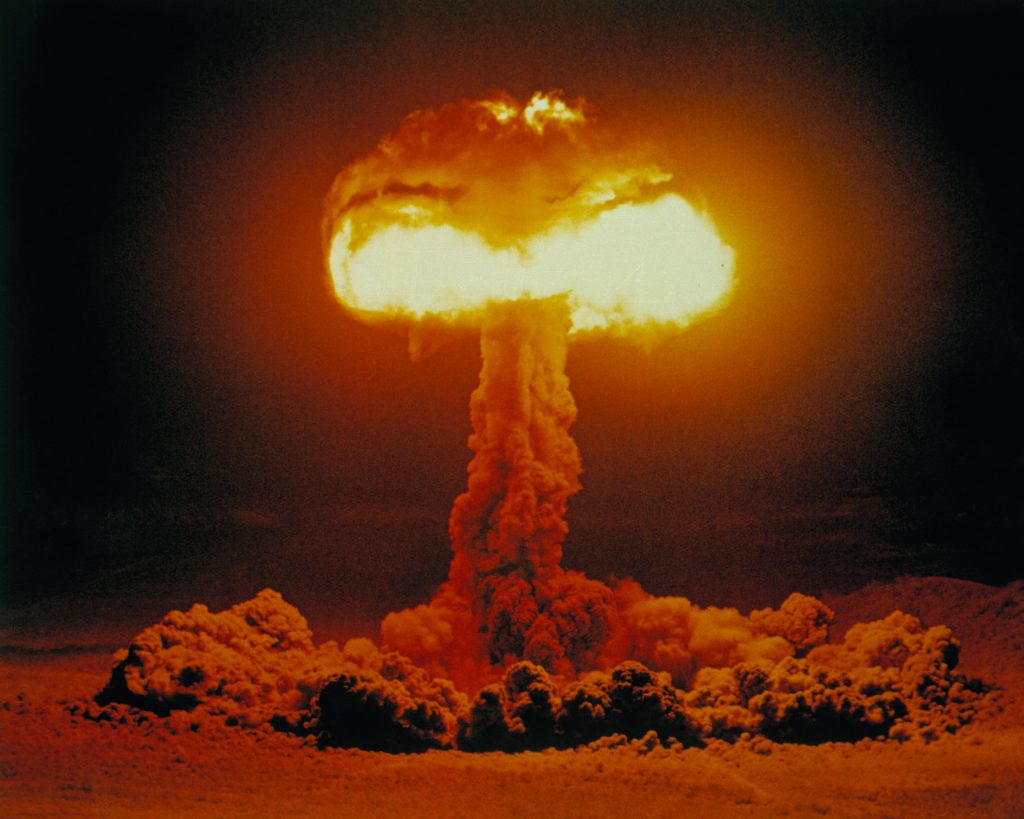
An Ideology Born from Global Tension
Posadism is one of the most extreme political ideologies to emerge during the Cold War. It developed in a period when humanity lived under the constant threat of nuclear annihilation. Unlike most political theories that seek to prevent catastrophe, posadism argues that nuclear war is not only inevitable but historically necessary to destroy capitalism and force the creation of a global communist society.
This ideology treats collapse not as a failure, but as a form of progress.
The Origins of Posadism
Posadism was formulated by Argentine Trotskyist theorist J. Posadas. He believed that capitalism had reached a terminal stage in which peaceful transformation was impossible. According to his view, global conflict was the only mechanism capable of breaking the existing world order.
Posadas argued that history advances through rupture rather than reform, and that nuclear war would accelerate humanity’s transition into a new social system.
Nuclear War as a Historical Stage
At the core of posadism lies the belief that nuclear war represents a transitional phase rather than the end of civilization. In this framework, mass destruction is seen as the collapse of outdated political and economic structures.
After such a catastrophe, posadism claims that:
- nation-states would lose their power,
- capitalist ownership would cease to function,
- survival would require collective organization,
- communism would emerge as a necessity rather than an ideology.
This logic places historical determinism above human survival.
The Neglect of Human Life
One of the most criticized aspects of posadism is its dismissal of human life as a moral priority. Millions of deaths are framed as an unavoidable historical cost. Human suffering becomes secondary to the abstract goal of systemic transformation.
This sharply distinguishes posadism from classical Marxism, which—at least in theory—centers social change on mass consciousness rather than total annihilation.
Aliens and Cosmic Communism
Posadism became infamous for incorporating ideas about extraterrestrial civilizations. Posadas argued that advanced alien societies must already live under communism, because only a cooperative and non-capitalist system could achieve advanced space travel.
He believed that:
- capitalist societies are incapable of true cosmic development,
- technological progress reflects social organization,
- extraterrestrial beings may eventually assist humanity after global collapse.
These ideas further marginalized posadism within political theory.
Rejection by Socialist States
Despite its radical pro-communist rhetoric, posadism was never adopted by any socialist state. The Soviet Union and other communist governments viewed nuclear war as a catastrophic failure, not a revolutionary tool.
Posadism was widely rejected as militarily dangerous, politically irresponsible, and ideologically detached from reality.
Posadism in the Modern Context
Today, posadism survives mainly as:
- an academic curiosity,
- an example of ideological extremism,
- an ironic reference in internet culture,
- a warning about apocalyptic political thinking.
Renewed global tensions and nuclear rhetoric have brought renewed interest in theories that predict civilizational collapse.
Why Posadism Still Matters
Posadism remains relevant not as a solution, but as a lesson. It demonstrates how fear, determinism, and ideological obsession can transform mass destruction into a perceived moral necessity.
It shows how political ideas can drift into dangerous territory when abstract goals outweigh human life.
Conclusion
Posadism is a radical ideology that interprets the end of the world as a historical opportunity. While it has never been implemented, it stands as one of the clearest examples of how political thought can lose ethical grounding during periods of global crisis.
Rather than offering a future, posadism serves as a warning about the risks of glorifying catastrophe in the name of progress.