by
by 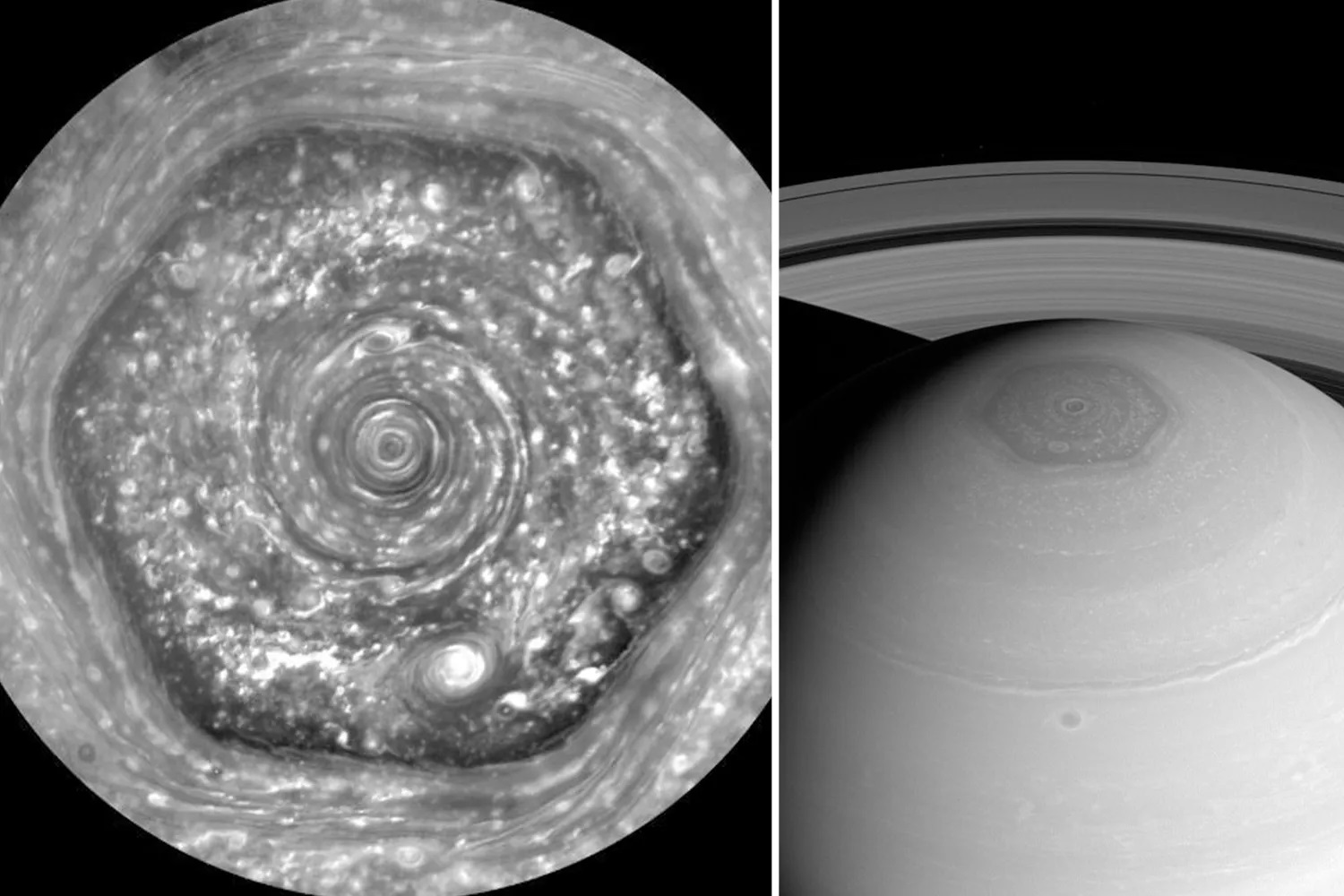
The Saturn Time Cube Theory is an alternative perspective on time, reality, and human consciousness that challenges the conventional understanding of time as a linear and one-directional process. According to this theory, reality is not organized in a simple sequence from past to future. Instead, it exists as a multi-dimensional structure in which multiple time states coexist simultaneously. Human perception, within this framework, captures only a limited portion of a much broader reality.
The Core Idea of Time Cube
At the center of the Time Cube concept lies the claim that a single day does not consist of one continuous timeline, but of four simultaneous time phases. Morning, noon, evening, and night are not sequential transitions but parallel temporal states that coexist within the same rotational cycle of the Earth. Human awareness moves through these phases without fully recognizing their simultaneous existence. This interpretation radically alters the common understanding of chronological order, suggesting that past, present, and future may not be strictly separated.
The Symbolic Role of Saturn
Within this theory, Saturn is not viewed merely as a planet but as a symbol of time, structure, and limitation. Across various cultural traditions, Saturn has been associated with discipline, cycles, boundaries, and karmic law. In the context of the Saturn Time Cube Theory, Saturn represents the structural framework that organizes perceived reality. Time, therefore, becomes not just a neutral dimension but an active force that shapes experience, identity, and social order.
Time as a Mechanism of Control
A significant component of the theory is the assertion that linear time is an illusion functioning as a control mechanism. Clocks, calendars, schedules, and age measurement systems construct a framework that conditions human thinking. Within this structure, urgency, stress, and the fear of running out of time are not natural states but consequences of living inside a regulated temporal system. Individuals begin to define themselves through deadlines, productivity, and age progression, reinforcing a controlled perception of existence.
Limits of Human Consciousness
The Saturn Time Cube perspective suggests that human consciousness is trained to perceive only one layer of reality. Education systems, social norms, and cultural narratives reinforce a single accepted model of time. Alternative dimensions or simultaneous temporal structures remain outside mainstream awareness. This conditioning creates the illusion of a stable and singular reality, even if existence may be far more complex.
Conflict with Scientific Thought
Modern science rejects the Saturn Time Cube Theory due to the absence of empirical evidence and mathematical foundation. From a scientific standpoint, the theory lacks testable predictions and measurable proof. However, supporters argue that institutional resistance is expected when ideas challenge deeply rooted paradigms. In their view, scientific consensus may also function as a stabilizing structure that preserves existing models of reality.
Philosophical Implications
Regardless of whether it is interpreted literally or symbolically, the Saturn Time Cube Theory raises fundamental philosophical questions. Is time an objective feature of the universe, or is it a cognitive construct designed to organize human experience? If perception defines reality, then questioning time itself becomes a way of questioning existence. The theory operates less as a scientific model and more as a conceptual experiment that invites deeper reflection.
Cultural and Intellectual Impact
Over time, the Saturn Time Cube Theory evolved into an internet-era cultural phenomenon. It symbolizes resistance to uniform thinking and challenges accepted assumptions about reality. Many people interpret it metaphorically rather than literally, seeing it as a critique of rigid structures rather than a physical explanation of time. Despite its controversial nature, it continues to stimulate discussion about consciousness, perception, and the boundaries of knowledge.
Conclusion
The Saturn Time Cube Theory offers a radically different interpretation of time, reality, and consciousness. Although it is not supported by scientific evidence, it serves as a powerful thought experiment. By challenging the concept of linear time, it encourages individuals to reconsider how deeply their perception of reality is shaped by cultural and structural systems. Whether viewed as metaphor or alternative philosophy, the theory ultimately invites reflection on the limits of human understanding.