by
by 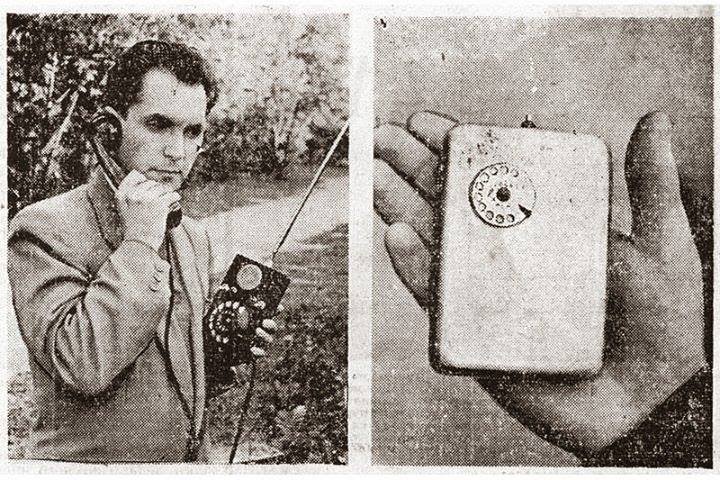
The history of mobile communication is usually associated with the 1970s and Western technology companies. However, much less known is the fact that the Soviet Union developed early portable radiotelephones already in the late 1950s. The central figure behind this work was engineer Leonid Ivanovich Kupriyanovich, who created the Radiophone system and its prototype device, the LK-1.
These developments are significant not because they are direct ancestors of modern smartphones, but because they introduced the idea of a personal, portable telephone that could connect automatically to the public telephone network without a physical wire.
The Radiophone Concept
Radiophone was designed as a portable radio-telephone device that allowed a user to place a call from anywhere within radio coverage. The device communicated wirelessly with a base station, which in turn was connected to the city’s wired telephone network. This architecture combined radio mobility with the universality of the telephone system.
For the first time, voice communication became independent of physical location while remaining integrated into the existing communication infrastructure.
The LK-1 Prototype
The LK-1 was the first practical implementation of the Radiophone idea. It was relatively compact for its time, weighing a few kilograms and powered by an internal battery. The device contained a radio transmitter and receiver, a voice processing unit, and a number-input mechanism — in some versions implemented as a rotary dial similar to those used in conventional telephones.
This allowed users to dial numbers directly, without relying on an operator or intermediary.
Technological Innovation
The main innovation of Radiophone was not radio communication itself, which already existed, but the introduction of individual user access to a shared communication network. Instead of group channels used in traditional radio systems, Radiophone envisioned personal, identifiable subscribers connected through a centralized switching system.
This principle later became fundamental to cellular and mobile communication networks worldwide.
Why It Was Not Widely Adopted
Despite its conceptual importance, Radiophone was never deployed on a large scale. Limitations included restricted radio frequency capacity, high infrastructure costs, large and power-hungry hardware, and a lack of political and economic priority for civilian personal communication.
At the time, Soviet technological resources were focused primarily on military, industrial, and strategic projects rather than consumer electronics.
Historical Significance
Radiophone and the LK-1 demonstrate that the idea of mobile telephony emerged independently in different parts of the world. Kupriyanovich’s work shows that Soviet engineers were actively exploring advanced personal communication technologies decades before mobile phones became commercially viable.
These systems remain important historical milestones in the evolution of global telecommunications.
Radiophone and the LK-1 were not direct technological ancestors of modern mobile phones, but they were crucial conceptual steps toward personal mobile communication. They illustrate how the vision of portable, location-independent telephony existed long before it became an everyday reality.