by
by 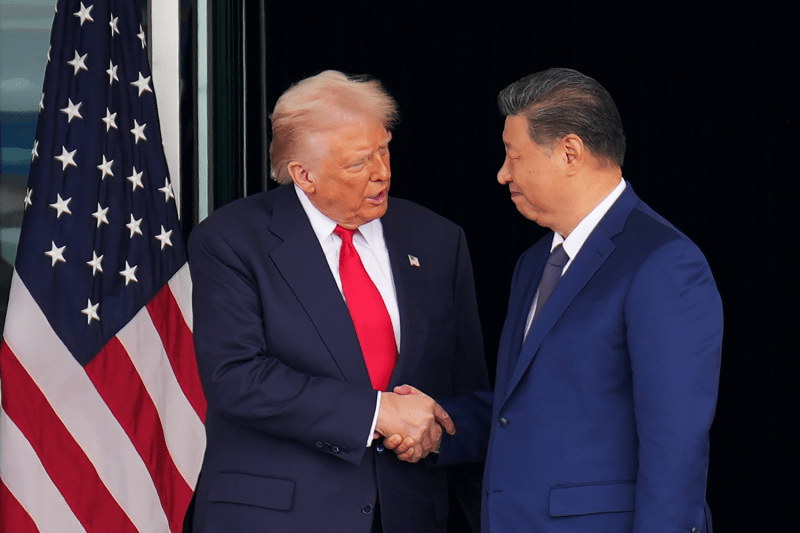
A Turning Point in U.S.–China Relations
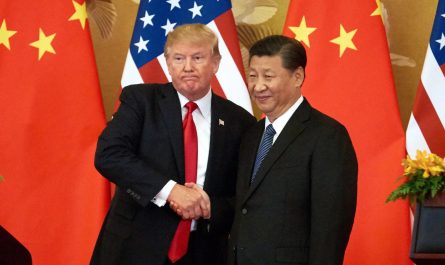
At the 2025 APEC Summit in Busan, South Korea, U.S. President Donald Trump and Chinese President Xi Jinping held their first face-to-face meeting in several years — a moment many analysts describe as a tactical truce rather than a full reconciliation.
The meeting aimed to stabilize the world’s two largest economies after months of escalating trade pressure, technology restrictions, and political rivalry. Despite deep-rooted tensions, both leaders signaled a willingness to restore limited cooperation.
Key Agreements
1. Tariff Reductions
Trump announced that U.S. tariffs on Chinese imports will be lowered from roughly 57 percent to 47 percent, calling the outcome “a truly great breakthrough.”
2. Rare-Earth Exports
China agreed to suspend its export controls on rare-earth elements for one year, a move expected to ease global supply concerns in the high-tech and defense sectors.
3. Fentanyl Precursors
Beijing pledged stronger enforcement against the export of precursor chemicals used in synthetic opioids. In response, Washington reduced certain tariffs to 10 percent on related products.
4. Agricultural Trade
China committed to resume large-scale soybean purchases from the United States, a step designed to rebuild trust among farmers and exporters.
5. Continued Dialogue
Both presidents agreed to maintain direct communication and explore further negotiations. Trump invited Xi to Washington, while Xi signaled openness to hosting Trump in Beijing early next year.
Why the Meeting Matters
The Busan summit may not rewrite the global trade order, but it temporarily lowers the temperature between Washington and Beijing.
- The rare-earth agreement reassures manufacturers of semiconductors, electric vehicles, and defense systems.
- The tariff cuts could relieve inflationary pressure and support supply-chain stability.
- The symbolic dialogue demonstrates that competition can coexist with selective cooperation.
Markets reacted positively, with Asian stocks and commodities edging higher following the announcement.
Remaining Challenges
Despite the optimism, deep structural disputes remain unresolved.
Washington continues to restrict advanced-chip exports, while Beijing maintains its state-driven industrial strategy.
Issues related to technology dominance, security policy, and Taiwan were largely absent from the official read-outs but continue to shadow the relationship.
Leaders’ Remarks
Donald Trump: “We opened a new chapter today. It was an amazing meeting — twelve out of ten.”
Xi Jinping: “China and the United States should be partners and friends. Under our joint guidance, the relationship has remained stable overall.”
Both statements struck an unusually conciliatory tone, underscoring that dialogue remains the preferred path — at least for now.
What to Watch Next
- Implementation of the rare-earth and tariff agreements in early 2026.
- Possible follow-up summits in Washington and Beijing.
- Reactions from U.S. Congress and Chinese ministries, which could determine the durability of this truce.
- Movements in global tech supply chains and commodity markets as businesses assess new conditions.
Summary
The Trump–Xi Busan meeting does not resolve the U.S.–China rivalry, yet it marks a pragmatic pause in a long-running economic standoff.
By mixing cooperation with competition, both leaders appear to be testing whether diplomacy can keep pace with their nations’ ambitions.
For now, the world’s two largest economies have chosen conversation over confrontation — a small step, but one that could ripple across the global market.